EMT Textbook Chapter 34—Obstetrics & Neonatal Care: Summary
Chapter 34 covers the prehospital care and transportation of pregnant patients and newborns. Students learn about the female reproductive system, the changes that occur in the body during pregnancy, and the possible complications.
Among other topics, the Chapter 34 curriculum covers the recognition and management of:
- Anatomy and physiology of normal pregnancy
- Pathophysiology of complications of pregnancy
- The pregnant patient
- Normal delivery
- Abnormal delivery
- Vaginal bleeding in the pregnant patient
- Third trimester bleeding
- Spontaneous abortion/miscarriage
- Ectopic pregnancy
- Newborn care
- Neonatal resuscitation
After completing Chapter 34 and its related coursework, you will understand the anatomy and physiology of the female reproductive system as it relates to pregnancy. You will learn the assessment and emergency treatment for childbirth, including stages of labor, normal delivery, complications of pregnancy, and neonatal evaluations and resuscitation. Many of the complications that can occur with pregnancy are also covered, including abuse, substance abuse, hypertensive disorders, bleeding, miscarriage, and gestational diabetes.
EMT Textbook Chapter 35—Pediatric Emergencies: Summary
Chapter 35 focuses on the prehospital care and transportation of pediatric patients (ages zero to 18). Students are taught the age-related assessment and treatment modifications for the major diseases and emergencies specific to the pediatric patient.
Among other topics, Chapter 35 covers:
- Upper airway obstruction
- Lower airway reactive disease
- Respiratory distress, failure, and arrest
- Shock
- Seizures
- Sudden infant death syndrome
- Gastrointestinal disease
Upon completing Chapter 35 and its related coursework, you will understand the anatomy and physiology of the child as compared to the adult. You will know the appropriate assessment and care for the types of illness and injury affecting children of all ages, injury patterns based on size, and special body system injuries. Also covered are the indicators of abuse and neglect, and the medical and legal responsibilities of an EMT.
Day 10: Summary
Successful completion of Day 10 of EMT Boot Camp will provide the required knowledge and skills to provide prehospital care and transportation of pregnant patients and pediatric patients, including newborns. You will understand the need to consider two patients—the woman and the unborn fetus—when treating a pregnant trauma patient. The assessment and emergency treatment for childbirth is also covered, including stages of labor, normal delivery, complications of pregnancy, and neonatal evaluations and resuscitation.
In addition, you will understand the age-appropriate treatment of illness and injuries in pediatric patients, including newborns. The indicators of abuse, substance abuse, and neglect, and the medical and legal responsibilities of the EMT are also covered.
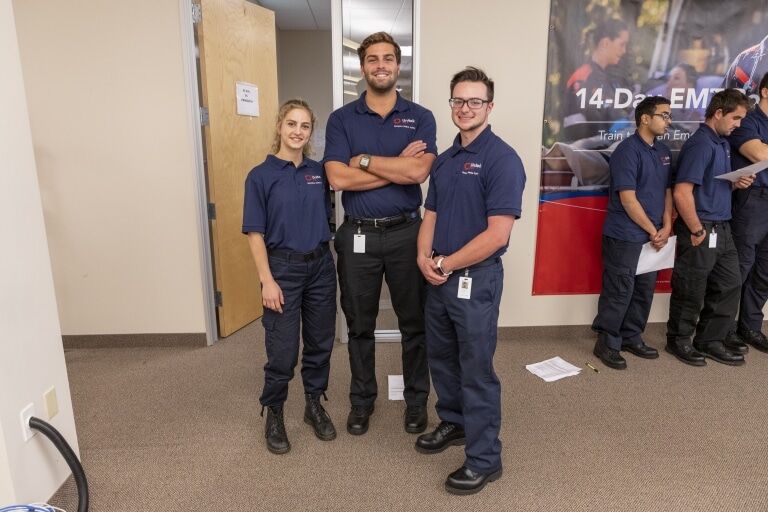
Day 10 requires 12 hours of participation from start to finish, including two half-hour breaks for lunch and dinner. The coursework and training are accelerated. You will be expected to process and retain a lot of information in a relatively short time.
The Unitek 14-day EMT Boot Camp is not easy, but it is worth it! Our dedicated graduates are among the best-trained and most effective EMTs in the world today. Click here to learn more about our two-week EMT Boot Camp.
(Click here to explore our full 14-day EMT Curriculum)
About Unitek EMT
Unitek EMT is one of the premier EMT schools in Arizona. Our mission is simple: training the next wave of top-notch EMT professionals. We offer a variety of training options to fit your needs, including an accelerated EMT program to get you mission-ready and certified fast. We also offer EMS Continuing Education courses to update your expertise and enhance your career. Unitek EMT instructors are experienced leaders in their fields, and our real-world training scenarios are ideal for aspiring EMT professionals.