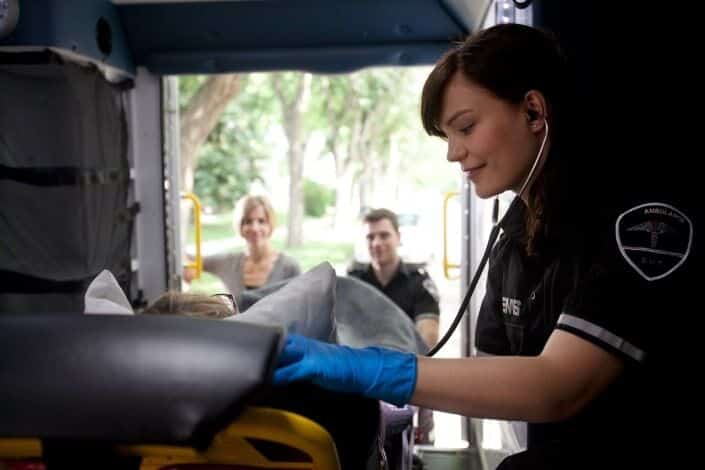
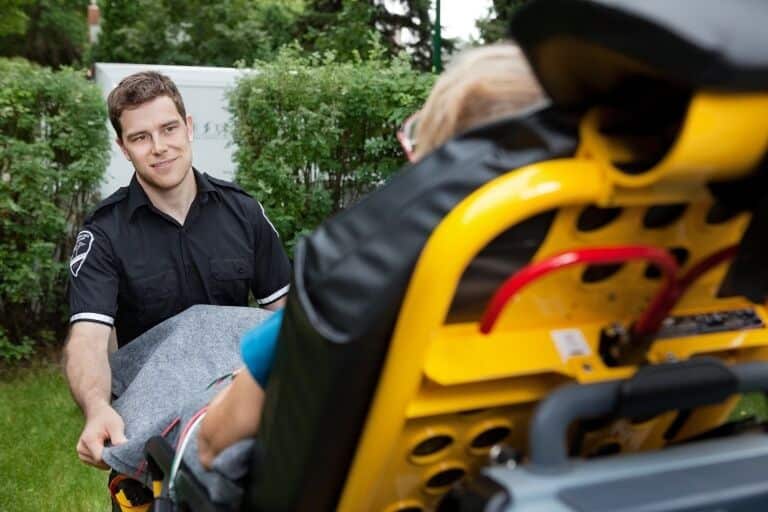
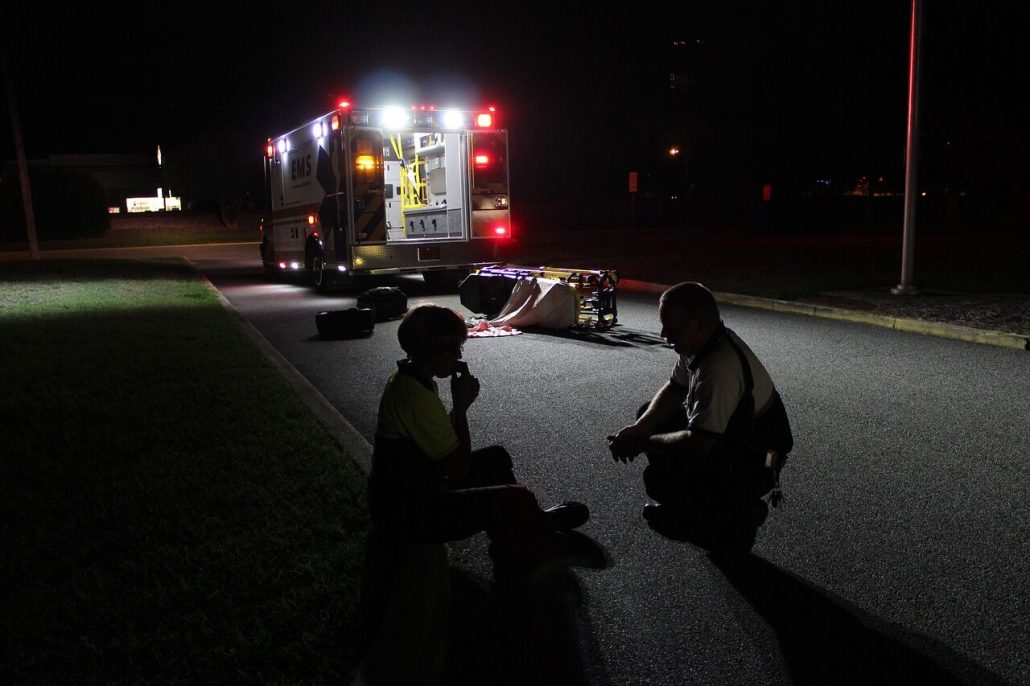
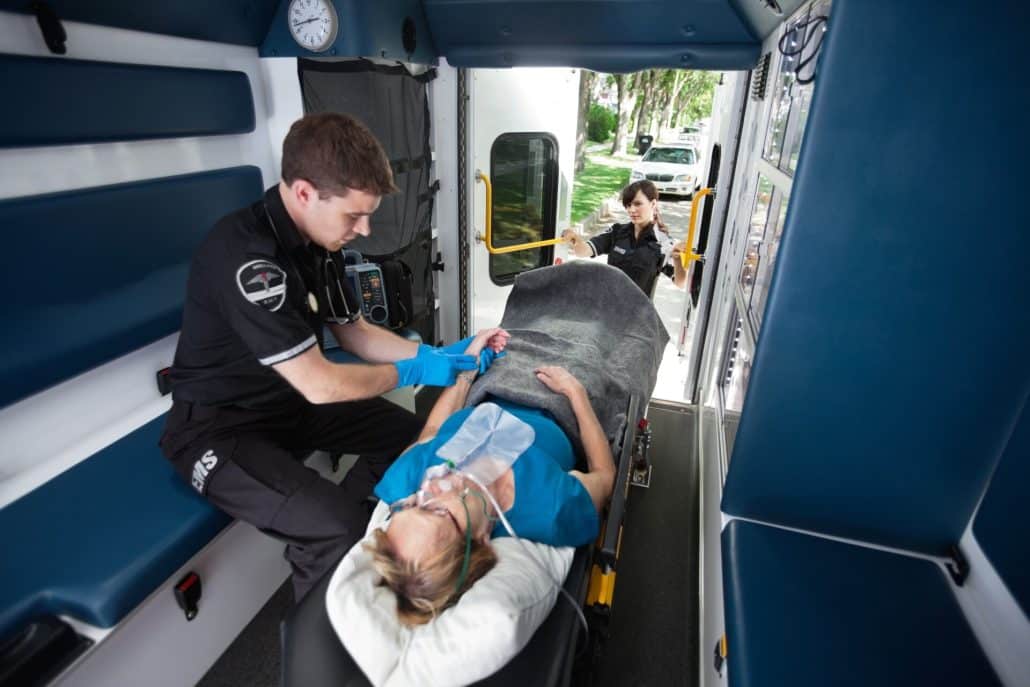
The idea of becoming an EMT might feel daunting at first. After all, medical emergencies are as varied from one another as they are common in occurrence. EMTs are often the first to arrive to a scene, and the ambulance siren is a welcoming sound to those injured, from car crashes to house fires to natural disasters. You can’t help but watch with respect as the well-trained men and women leap into action, administer aid, and carry the wounded to safety.
We’re so amazed by the work done by the EMS (Emergency Medical Services) that we can’t get enough of their stories. They’re our heroes and our helpers, and we need more of them.
If you’ve ever wondered how to become an EMT or are curious about this challenging and highly regarded profession, this page is for you. Below you’ll find everything you need to know about beginning your EMT career.
What Is an EMT?
EMT stands for Emergency Medical Technician. An EMT is a healthcare professional trained to provide basic emergency medical care in various situations, such as accidents, injuries, sudden illness, or trauma. EMTs work on ambulances, emergency response teams, or in hospitals and are often the first responders to a medical emergency.
EMTs are trained to assess a patient’s condition, provide essential life support, and transport patients to the hospital for further medical treatment if necessary. An EMT may perform some of the tasks that include administering oxygen, managing airways, performing CPR, controlling bleeding, and providing essential medication.
What’s the Difference Between a Paramedic and an EMT?
EMTs and Paramedics serve similar purposes. Both are first responders, and both provide emergency aid on the go. The primary difference between the two is the level of training. EMT training is thorough but can be completed in under six months, with opportunities to rise to higher trained levels (such as EMT-Basic, EMT-Intermediate, and EMT-Paramedic).
On the other hand, paramedic training can take two or more years and is a more rigorous field of study. Because of the additional training, Paramedics can perform more complex medical procedures in the field, like intubation, IV insertions, manual defibrillation, and drug administration.
Many EMTs go on to become Paramedics. In fact, many paramedic programs require applicants to work a certain time as an EMT before they can begin paramedic training. The skills learned as an EMT are a vital step towards the paramedic career and skillset.
How Much Do EMTs Make?
According to the Bureau of Labor Statistics (BLS), the average salary for an EMT was about $40,120 per year, or approximately $19.29 per hour, as of May 2022. The pay rate for EMTs can vary based on location, experience, and level of training required. The lowest-earning 10% of EMTs earned about $28,2700 as of May 2022, while those in the top 10% earned more than $56,890. In other words, the higher your training level, the higher your salary.
As for job availability, it’s a great time to become an EMT. The BLS projects the number of EMT jobs to rise by 5% by 2032.
Highest Paying States for EMTs
As noted by the BLS, Emergency Medical Technicians earn the highest average wages in these states (as of May 2022):
State
Average Hourly Pay
Average Salary
Hawaii
$27.30
$56,790
Maryland
$ 26.01
$54,110
Alaska
$25.52
$53,080
District of Columbia
$24.79
$51,550
Massachusetts
$23.80
$49,500
Highest Paying Cities for EMTs
According to the BLS, Emergency Medical Technicians earn the highest average annual wage in these cities (as of May 2022):
City
Average Hourly Pay
Average Salary
Kennewick-Richland, WA
$31.79
$66,130
Coeur d’Alene, ID
$31.51
$65,540
Urban Honolulu, HI
$28.84
$59,990
Washington, DC
$28.57
$ 59,430
San Francisco, CA
$28.29
$58,840
San Jose, Ca
$26.40
$54,900
Chicago, IL
$26.22
$54,540
Barnstable Town, MA
$25.17
$52,350
New Haven, CT
$24.28
$50,500
Boston, MA
$24.18
$50,290
How Long Do You Train to Become an Emergency Medical Technician?
Not long! For example, if you’re studying to be an EMT in Arizona, you can complete your courses in just 14 days by attending the Unitek EMT 14-Day Boot Camp. As the name suggests, the course features hands-on, instructor-led training over 14 consecutive days. The robust curriculum, frequently updated as the medical landscape constantly changes, combines theory lectures with hands-on medical equipment exercises.
Students can expect 10 hours of instruction per day (simulating the intense pace of an EMT), realistic emergency simulations, and assistance in passing the National Registry EMT (NREMT) certification exam. Complimentary lunches and dinners are also provided—so all you’ll need to focus on is learning to save lives.
After you’ve been certified, you’ll need to keep up with your training and any changes in the field. Unitek also offers an EMT refresher course for just that purpose.
Who Can Be an EMT?
If you want to become an EMT, there’s a good chance you can. However, you’ll need to meet some requirements before learning to drive the ambulance. EMT applicants must:
Have a high school diploma or GED
Be CPR-certified
Have the ability to lift more than 100 pounds
Pass a criminal background check and drug test
Requirements may vary slightly according to your chosen training program, but these four are the most common.
Not everyone can be an EMT, unfortunately. These include applicants who:
Are unable to read at a 9th-grade level
Don’t meet the basic requirements
Have a criminal background or a history of drug abuse
Just want to wear the uniform
Just want to drive fast
Easily “burn out” from long shifts and stressful situations
Think that EMT training will be easy because it’s shorter than a college degree
Being an EMT isn’t all about racing through red lights, blaring a siren, and saving dozens of lives daily. At its core, the job of an EMT is to care for people.It requires patience, the ability to stay calm and think under pressure, and the capacity to treat band-aid situations with the same professionalism as stretcher situations.
How to Become a Certified EMT?
In addition to your healthcare provider’s CPR certification and completing a state-approved EMT program, you’ll also need to be certified by the National Registry of Emergency Medical Technicians (the NREMT exam).
The NREMT exam consists of two parts—a cognitive exam (knowledge test) and a psychomotor exam (a hands-on assessment). Requirements may vary slightly from state to state.
The good news is your EMT courses should cover everything you need to know for the tests, so no additional research is required! For example, the Unitek EMT 14-Day Bootcamp teaches future EMTs with the NREMT specifically in mind.
If you’d like to brush up on any psychomotor exam treatments, below are a few checklists from nremt.org on key procedures that will almost certainly be on the test.
EMTs must perform a wide variety of physical tasks during their shifts, so to do the job properly (and best care for your patients), there are some physical requirements you’ll need to meet.
+ Strength and Mobility – EMTs should be able to lift at least 100 pounds, push at least 50 pounds, and have the stamina, endurance, and flexibility to repeatedly lift, bend, and kneel.
+ Coordination – Wrapping bandages and operating medical controls takes a steady hand (for paramedics, this requirement is even more important as they perform procedures such as inserting IVs). You also may be working in small spaces, climbing stairs, or carrying patients.
+ Communication – To treat patients as quickly as possible, doctors and hospitals will depend on you to report clearly and concisely on your patients’ conditions, so EMTs must be able to speak clearly.
+ Sensory – Good vision and good hearing are very important. Both are required to assess situations, treat patients, and safely transport them back to the hospital.
+ Overall Health – Besides being up-to-date on your immunizations, you’ll also be expected to pass a basic physical to show you have no health issues that could prevent you from doing your job. Some companies also screen for drug and alcohol use, and most will screen applicants if they find a history of abuse.
The exact physical requirements will vary by state, hospital, or company (colorblindness, for example, might be an issue for some but not others), so be sure to read the requirements carefully when applying.
What Is a Typical Day for an EMT?
Ask this of any EMT, and the answer will always be the same—there are no typical days. Shift lengths will depend on your employer (some work 12-hour shifts, others 24-hour), and those on-call hours can be unpredictable as you never know what emergency calls will come.
Most shifts begin with a rig check—examining all the ambulance’s parts and supplies to ensure everything is in perfect operating condition. Checking equipment is also essential; the last thing you want is to show up at an emergency and discover your oxygen tank is nearly empty or you’ve run out of bandages.
Like firefighters, EMTs on the night shift sometimes sleep at their headquarters, ready to jump into action when a call comes in. During the day, EMTs clean the station, socialize in the recreation room, or study for additional certification. However, you’re expected to drop everything immediately when the call comes in. When lives are on the line, seconds often make all the difference.
The emergencies themselves range from heart attacks to car accidents to childbirth and much more—so many possibilities that it would take far too long to list them all out here. Your job as an EMT is to reach the patient as quickly as possible, stabilize the patient, administer the initial treatment, and contact your ER doctor if a trip to the hospital is required.
So, what’s a typical day like for an EMT? Never boring.
What Shifts Do EMTs Work?
According to the Bureau of Labor Statistics, most EMTs work full time with at least 40 hours per week. Traditional shifts are 12 or 24 hours, depending on your employer’s policies. Overtime is also available at many locations, with 1 in 3 EMTs working more than 40 hours weekly. Because emergencies can happen anytime, overnight hours and weekends can also be involved.
Can EMTs Transfer to Other States?
Exact requirements vary from state to state, but because the certification exam is administered by a national organization (the National Registry of Emergency Medical Technicians), transferring to a job in another state is typically easy to do if your certification is up-to-date. If moving to Texas, for example, the state doesn’t require you to retake the NREMT exam if you’re already certified. There will be applications (and application fees) involved, so be sure to research requirements before the move so you don’t run into surprises.
Should I Become an EMT?
If you’re smart, hard-working, physically capable, and compassionate, then you can become an EMT. Whether you should become an EMT, though, is a question only you can answer. To help with the decision, here’s some advice from EMTs in the field on their experiences with the job.
“On a scale of one to ten, this job is a ten without a doubt. One minute I could be helping an older lady with her groceries and the next I’m performing CPR and trying to save someone’s life.The best part of the job has to be the lives that I save. Having the chance to provide the best care they deserve and even trying to put a smile on their face when they are going through their worst moments.”
“I’ve been an EMT for over a year now and absolutely love it. It’s great exposure to a part of medicine that you wouldn’t otherwise experience until your 3rd year of med school.”
“I was a paramedic/firefighter for six years prior to med school, and an EMT-B for two years before that (yes, I’m semi-old). However, I have no doubt that the experience has helped me with med school. First, I truly believe it helped me to get in. Second, I know that it has helped me to have a greater understanding of what we are learning, and to appreciate the “why” behind learning the material. Third, I think that having patient care experience will come in handy when they finally let me onto the wards. Finally, and most importantly, being a paramedic helped me to know without a doubt that being a physician is what I want to do in life.”
The NREMT Exam– To find a testing location near you (and to register), visit this page on the National Registry of Emergency Medical Technicians’ website.
Training – If you want to become an EMT in Arizona, apply for the Unitek EMT 14-Day Bootcamp.
(For those outside Arizona interested in becoming an EMT, simply Google “EMT course near me” to find a program in your area.)
Get started today!!
Complete this form and our Admissions department will contact you shortly with more information..